NIL Changed Everything Except the Part Where the NCAA Still Wins
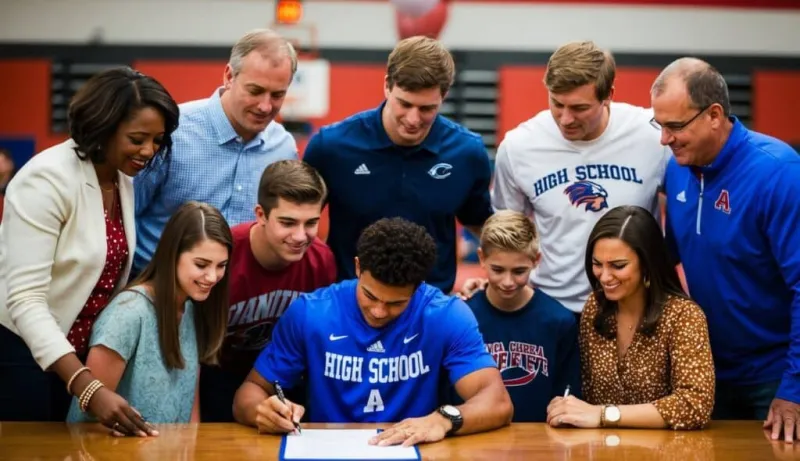
Photo: college football player signing contract NIL deal campus, via gamedayculture.com
For decades, the NCAA ran one of the most brazenly profitable nonprofit operations in American history. They sold broadcast rights for billions, licensed jerseys with players' numbers on the back, and presided over a system where the labor force — the actual human beings generating all that revenue — was compensated with a scholarship and a strongly worded handbook about amateurism.
Then the dam broke. Court decisions, state legislation, and the sheer embarrassment of watching the NCAA's legal arguments get shredded in public forced the organization into an era it never wanted: the NIL era, where college athletes can profit from their Name, Image, and Likeness. Cue the press releases about empowerment. Cue the think pieces about a new dawn for college sports.
Here's the thing about dawns: they look great in the first five minutes, and then it's just another day.
The Headline Numbers Are Doing a Lot of Heavy Lifting
Yes, some college athletes are making serious money now. The quarterback at a blue-blood program, the women's gymnast with a million Instagram followers, the five-star basketball recruit who arrives on campus already famous — these athletes are signing real deals with real dollars attached.
Opendorse, one of the companies tracking NIL activity, has reported total NIL compensation figures that sound genuinely impressive in press releases. And individual deals make for great content: the LSU gymnast with the cosmetics partnership, the Alabama quarterback with the car dealership money, the Iowa women's basketball star who became a legitimate cultural phenomenon.
But aggregate headline numbers are a magic trick. They're dominated by a tiny number of high-profile athletes whose earning power existed entirely because of their visibility in major revenue sports at major programs. The average NIL deal for an athlete outside that narrow band of fame? Substantially less inspiring. A lot of free product. A few hundred dollars for a social media post. The occasional local restaurant appearance fee.
The wealth is not being distributed. It's being concentrated, and then the concentration is being used as proof that the system works.
The Transfer Portal Is Freedom With an Asterisk
The transfer portal was supposed to break the stranglehold coaches had over player mobility. Before, transferring meant sitting out a year, losing eligibility, and navigating a permission system that gave your old coach enormous leverage over where you could go next. It was, not to put too fine a point on it, a mechanism of control dressed up as procedure.
Now athletes can move freely, and in many cases they should. A kid who got misled during recruiting, or whose coach left for a better job the moment a bigger check arrived, deserves the ability to find a better situation. That part is genuinely good.
But the portal also created something else: a market for established, proven players that has almost entirely benefited programs that already had money and prestige. The transfer portal didn't level the playing field — it gave wealthy programs a second recruiting window to buy proven commodities, while smaller programs watch their developed talent get poached the moment it becomes attractive.
Team continuity has been gutted. Coaches who spent years developing a player now do so knowing that player can walk the moment a bigger program comes calling with a better collective deal. The irony is that the same coaches who argued for athlete mobility restrictions for decades are now the ones most aggressively exploiting portal freedom to rebuild rosters overnight. Principles are flexible when the buyout is big enough.
Collectives: The NCAA's Plausible Deniability Machine
Here's where the architecture of the new system gets genuinely clever in a way that should make you uncomfortable. Because the NCAA cannot directly pay athletes — that would be employment, and employment means labor law, and labor law means the whole house of cards collapses — NIL compensation runs through a parallel infrastructure of booster-funded "collectives."
These collectives are ostensibly independent organizations that connect athletes with NIL opportunities. In practice, at the major programs, they are thinly veiled pay-for-play mechanisms where wealthy boosters funnel money to recruits and transfers in exchange for their athletic services. Everyone knows this. Nobody says it out loud in official settings.
The NCAA has issued guidance, wrung its hands, and done approximately nothing effective to regulate collectives, because doing so would require acknowledging what collectives actually are. So instead, the organization maintains the fiction of amateurism while booster-funded collectives do the work of a professional payroll in plain sight.
The result: recruiting is now substantially about which program's collective has the most money, which means it's about which program has the wealthiest and most motivated donor base, which means the SEC and the Big Ten just got an even bigger structural advantage over everyone else. Revolutionary.
What Athletes Actually Got (And Didn't)
Let's be honest about what changed and what didn't. Athletes got the right to profit from their own image — which they should have had all along, and the fact that it took antitrust litigation to get there says everything about the NCAA's values.
What they didn't get: guaranteed compensation, health insurance tied to their athletic participation, long-term disability coverage for career-ending injuries, a seat at the table where revenue distribution decisions are made, or any meaningful protection from the same coaches and administrators who now market themselves as champions of athlete empowerment.
The schools still control the facilities, the coaching staffs, the scheduling, the media relationships, and the revenue streams. The NCAA still controls the eligibility framework. Athletes got the right to monetize their fame — but only the already-famous ones got rich, and everyone else got the right to post a discount code for a local supplement company.
The Scoreboard Doesn't Lie
The NCAA took a loss in court and in public opinion, absorbed it, restructured the surface layer of its operation, and emerged with its fundamental power intact. The conferences that matter got richer. The programs that were dominant stayed dominant, now with better recruiting tools. The athletes at the top got paid, which gives the whole system a human-interest story whenever someone needs to argue that everything is fine.
Everything is not fine. It's just better at looking fine than it used to be.
The college sports machine needed a villain rebrand, and NIL gave it one. Now instead of the NCAA nakedly exploiting unpaid labor, you've got a vibrant marketplace of opportunity — as long as you're already famous, already at a wealthy program, and already the kind of athlete that a car dealership in Tuscaloosa wants on their billboard.
For everyone else? The scholarship still comes with a handbook. The handbook still has a lot of rules. And the people writing the rules are still very much in charge.