Your Stadium Has Been Sold and So Has Your Soul: The Corporate Naming Rights Racket
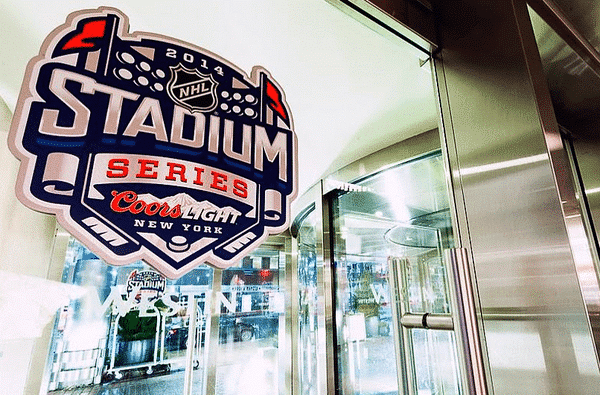
Photo: corporate stadium signage naming rights sports arena exterior, via www.mossinc.com
Somewhere out there, there is a 65-year-old man who watched his first baseball game at a stadium with a real name — a name tied to a neighborhood, a river, a person, a place — and now that same stadium is called something like "Guaranteed Rate Field" or "Crypto.com Arena." He hasn't complained loudly enough. None of us have. And that silence has cost us more than we realize.
Welcome to the naming rights industrial complex, a billion-dollar racket dressed up as a sponsorship opportunity, quietly erasing the geographic and emotional identity of American sports venues one corporate check at a time.
How We Got Here: A Brief History of Selling Out
It didn't happen all at once. It never does with this kind of thing. The slow boil started in 1988 when the Pilots Field deal in Buffalo introduced the modern naming rights template to professional sports. By the time Enron Field opened in Houston in 2000, the trend was fully entrenched — which, come to think of it, should have been a warning sign about the whole enterprise given what happened to Enron approximately eighteen months later.
That's the first thing nobody talks about enough: these deals are only as stable as the companies signing them. Corporations go bankrupt, get acquired, rebrand, or simply decide the ROI isn't there anymore. When they do, your stadium name evaporates overnight. Fans who bought season tickets, personalized merchandise, and tattoos (yes, people have done this) are left holding the bag while the team quietly files the paperwork for a new naming rights partner.
PSINet Stadium became M&T Bank Stadium. CMGI Field became Gillette Stadium. Adelphia Coliseum became LP Field became Nissan Stadium. Every one of those transitions cost the team exactly zero dollars in guilt.
The Financials: Who's Actually Getting Paid Here
Let's be honest about the economics, because the money is genuinely staggering and precisely none of it trickles down to the people who actually fill the seats.
SoFi Stadium in Los Angeles — home of the Rams and the Chargers — locked in a 20-year, $625 million naming rights deal. That is six hundred and twenty-five million dollars for the right to put a fintech company's name on a building in Inglewood. The stadium cost $5.5 billion to build, much of it subsidized through public financing mechanisms and infrastructure deals that shifted risk onto taxpayers. Then the team turned around and sold the naming rights for enough money to run a small country's education budget for a decade.
The fans? They got to pay $150 for parking.
This is the part of the conversation that team owners would prefer you skip over. Naming rights revenue is pure margin. It doesn't reduce ticket prices. It doesn't lower concession costs. It doesn't fund youth programs or community initiatives in any meaningful way. It goes directly into the revenue-sharing pool or straight to ownership. The naming rights deal is essentially a second sale of an asset the fans already paid for once.
The Hall of Shame: Names That Should Have Never Happened
Not all corporate stadium names are created equal. Some are merely forgettable. Others are a genuine crime against the English language and human dignity.
Guaranteed Rate Field — Home of the Chicago White Sox. Nothing says "this is a sacred space where your father took you as a child" like the name of a mortgage company. Guaranteed Rate, for context, is a lender that sponsors a field where nothing is guaranteed, including whether the White Sox will finish above .500.
Smoothie King Center — The New Orleans Pelicans play here. It's where the NBA happens in one of the most culturally rich cities in America. Named after a smoothie franchise. A smoothie franchise.
KFC Yum! Center — Louisville, Kentucky. The exclamation point is doing a lot of heavy lifting in a building named after a fast food holding company. The Yum! is mandatory punctuation in the official name. We are all living in a simulation.
Crypto.com Arena — Formerly the Staples Center, one of the most iconic arena names in modern sports history. Renamed in 2021 for $700 million to a cryptocurrency exchange that has since laid off hundreds of employees and watched its platform value crater. The ink was barely dry.
The Staples Center renaming genuinely hurt people. Not metaphorically. Sports radio in Los Angeles ran days of caller segments from fans who felt legitimately bereaved. That reaction gets mocked by the business press as sentimentality, but it reveals something true: these buildings matter to people in ways that spreadsheets don't capture.
What We Actually Lose
Wrigley Field exists because William Wrigley Jr. bought the Cubs and attached his name to the ballpark over a century ago. It has survived every trend, every corporate temptation, every offer. It means something. When you say "I'm going to Wrigley," you're not describing a transaction. You're describing a pilgrimage.
Fenway Park is the same. So is Lambeau Field — named for Curly Lambeau, the Packers' founder, and kept that way because the Green Bay community owns the team and understands that some things aren't for sale.
These are the exceptions, and they prove the rule. A stadium name that survives long enough becomes part of the city's vocabulary, its mythology, its identity. Corporate names don't do that. They can't. Because the whole point of a corporate name is that it changes when the contract does.
You don't tell your grandkids about the time you saw a classic game at Lumen Field. You tell them about a place that felt like it belonged to you.
The Acceptance Is the Real Scandal
Maybe the most depressing part of this whole racket isn't that teams sell naming rights. It's that fans have essentially stopped fighting it. The outrage cycle lasts about a news cycle, maybe two, and then everyone adjusts. People start using the new name. The old name becomes a trivia question.
That normalization is exactly what the sports business machine is counting on. The assumption — accurate, so far — is that fans' love for their team is unconditional enough to absorb any indignity. Rename the building. Raise the ticket prices. Move the team to a different city. Fans will come back.
They're not wrong. But being predictable doesn't mean being right.
Somewhere, a conference room full of marketing executives is deciding what to name your team's home next. They are not thinking about your memories. They are not thinking about the first game you attended with your dad. They are thinking about impressions, brand alignment, and quarterly earnings calls.
And when the deal closes, they'll send out a press release calling it "an exciting new chapter."
No Fuchs Given — but somebody sure is getting paid.