Questionable, Probable, and Full of Crap: The NFL Injury Report Is a Work of Fiction
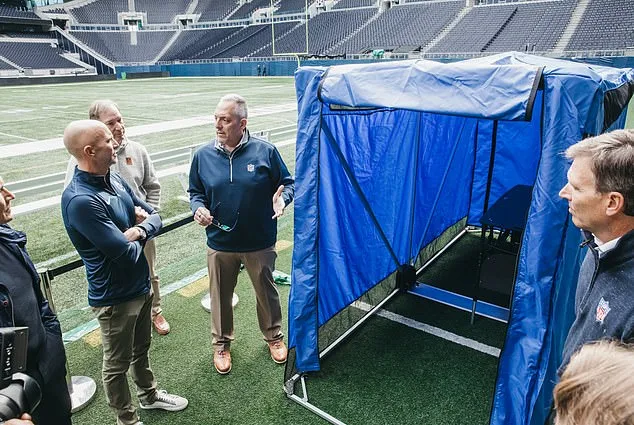
Photo: NFL player injury sideline training staff examination, via i.dailymail.co.uk
Every Thursday, a sacred ritual plays out across NFL facilities nationwide. A team official sits down, opens a laptop, and types out a list of player ailments so deliberately vague they could double as a horoscope. "Questionable — knee." "Doubtful — illness." "Limited participation — personal reasons." Somewhere, a fantasy football manager screams into a pillow. Somewhere else, a beat reporter nods and writes it all down like it means something.
It doesn't. Not even a little.
The NFL injury report is the sports world's most elaborate piece of institutional fiction — a league-mandated document that technically exists to protect bettors and fans from information asymmetry, but in practice functions as a weekly exercise in strategic misdirection. And if you've spent more than five minutes following professional football, you already know this. You've just been too polite to say it out loud.
We are not polite here.
The Language Was Designed to Mean Nothing
Let's start with the terminology, because the NFL's injury designation system reads like it was designed by a committee of lawyers who had never actually watched a game.
"Questionable" officially means a player has a 50/50 chance of playing. In practice, it means whatever the head coach wants it to mean on any given week. A quarterback with a "questionable" thumb designation might throw for 340 yards Sunday. A wide receiver listed as "limited" in practice might not see the field until October. The same word covers both situations. That's not a classification system — that's a Magic 8-Ball with a medical degree.
And don't even get started on "day-to-day." Day-to-day is the injury report's version of "we'll circle back" — a phrase that sounds responsive while committing to absolutely nothing. Day-to-day can stretch into week-to-week, which quietly becomes month-to-month, which eventually becomes "placed on IR with a designation to return" — the point at which everyone finally admits this guy was never playing anytime soon. You had eight weeks of breadcrumbs and zero real information. Congratulations on following along.
The Load Management Laundering Operation
The NBA pioneered load management as a concept, but the NFL has internalized its core philosophy: when you don't want to say what's actually happening, call it something clinical and hope nobody pushes back.
Load management in the NFL doesn't get called load management, of course. It gets called "maintenance," or "coach's decision," or the always-reliable "we're just being cautious with him." But the outcome is identical — a healthy-enough player sitting out games for reasons that have nothing to do with what's on the injury report and everything to do with what's happening in the front office.
Tank seasons are where this gets truly creative. When a franchise has quietly surrendered on the year and is angling for a top draft pick, suddenly half the roster is "managing" something. The starting quarterback has a "shoulder issue" that gets serious right around Week 10, when the team is 2-7 and the front office has started googling college quarterbacks. Offensive linemen are "day-to-day" with knee concerns that somehow resolve themselves the moment the season ends. The injury report becomes a roster management tool, and fans are left playing medical detective while the organization is playing a completely different game.
The Contract Year Miracle: A Recurring Phenomenon
Perhaps no pattern in professional sports is more reliably predictable — or more reliably ignored by the mainstream media — than the contract year recovery arc.
Here's how it works. A player has been "managing" a nagging injury for one, sometimes two seasons. His snap counts are limited. His stat lines are disappointing. Team officials speak carefully about his "progress" and "day-to-day" status in tones that suggest cautious optimism while revealing nothing. The fanbase grows frustrated. Trade rumors start circulating.
Then the final year of his contract arrives.
And he's fine. Completely fine. Better than fine, actually — he looks like a guy who spent the offseason doing nothing but working out and drinking green smoothies. The nagging injury has vanished. He's practicing fully. He's making plays. He's doing interviews about how great he feels and how excited he is for this season.
This is not a coincidence. This is not medicine. This is a negotiating strategy wearing a compression sleeve.
We've seen this play out so many times it's practically a genre. Running backs who were "limited" for eighteen months suddenly finding another gear when their next payday is on the line. Pass rushers whose "back tightness" evaporated right around the time their agent started making calls. The injury report is the canvas; the contract situation is the actual painting.
What Teams Are Actually Hiding
Here's the uncomfortable truth that nobody in the league wants to discuss directly: injury reports often obscure dysfunction that has nothing to do with physical health.
Locker room conflicts get laundered through vague medical language. A player who is feuding with a coordinator is suddenly "managing a soft tissue issue" that limits his practice reps. A veteran who has been told he's being phased out in favor of a rookie is placed on the injury report with a designation so ambiguous it could cover anything from a sprained ankle to existential dread. Guys who are simply being punished for off-field behavior or contract disputes disappear into "personal reasons" designations that the team is under no obligation to explain further.
The league's rules are permissive enough to allow all of this. Teams are required to report injuries, but the definitions of what counts as an injury, and how severe it has to be to warrant listing, are loose enough to drive a truck through. Front offices have decades of practice exploiting every inch of that looseness.
The Fan Is the Last to Know — By Design
None of this is accidental. The NFL is a multibillion-dollar enterprise that has spent considerable energy developing systems that maximize competitive advantage while minimizing transparency. The injury report sits at the intersection of both goals — it technically exists to level the playing field, but it's been gamed so thoroughly that it mostly just adds noise.
Fans and fantasy players spend real time and real energy trying to decode these reports. Beat reporters file stories parsing the difference between "limited" and "full" practice participation like it's the Zapruder film. Radio hosts debate whether a "questionable" designation means a guy is playing or not, as if the team's actual intention is somehow encoded in a single word.
It's not. The team knows what it's doing. The player knows what's happening. The coaching staff has already made the call. The injury report is the last to find out, and so are you.
The system isn't broken. It's working exactly as the people in charge designed it to work — for them, not for you. So the next time you see a star player listed as "questionable — knee" on a Thursday afternoon, save yourself the speculation. Flip a coin. It'll be just as accurate, and it'll take a lot less of your time.